
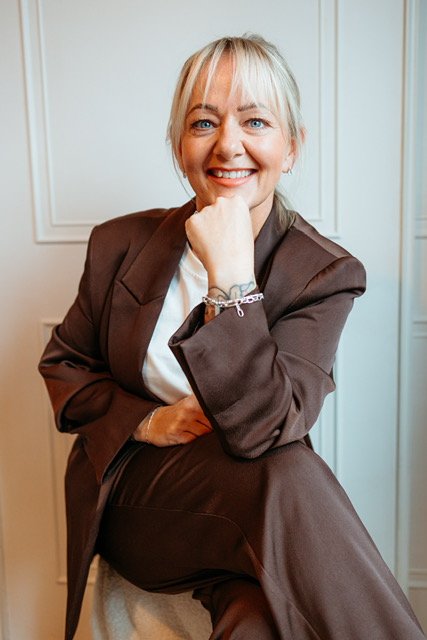
Meet your therapist - Emma
Hello and welcome to E.M Therapy. My name is Emma and I am a BACP registered therapist, deeply passionate about the power of therapy and the difference it can make in people’s lives.
It’s long been a privilege to support adults, children and young people on their therapeutic journey through E.M Therapy and being a witness to so many of these journeys is what keeps me inspired by humanity.
Hundreds of individuals have walked through my doors, sometimes nervous, sometimes scared, sometimes excited- all curious, brave and courageous.
For each of those and for each of you my space is safe, understanding and compassionate allowing you clarity, healing and growth.
And so, whatever brings you to therapy, I’m here to help you.
Thank you
It’s an Honour to Be Part of Your Journey
E.M Therapy offers 'Compassionate Counselling for Modern Life' - helping you manage stress, shame and self criticism by developing self-kindness and understanding, fostering a safe, non-judgemental space where you learn to soothe and build emotional resilience. Using techniques that activate calming systems in the brain, this can be hugely effective for complex modern issues like anxiety, stress and trauma.

If modern life is feeling overwhelming, whether through anxiety, low mood, trauma or emotional struggle, reaching out for support can be a powerful step forward.
I’m deeply honoured to support people at times when life feels most difficult, offering understanding, care and a safe space to be heard.

Therapy is a collaborative process. Together, we’ll gently explore what’s holding you back, make sense of past experiences and support your confidence and wellbeing. My space is calm, kind and free from judgement, built on empathy and trust — because I believe this is where real growth begins. But don’t just take my word for it, read some of the client reviews to understand what it can be like on the other side of the room.
Real Clients
Real Words
Hi Emma,
I've noticed some things I appreciated about our sessions and wanted to share with you.
I really value how you make our sessions feel like a conversation rather than an interview. I love that we can laugh, have moments of humour and still explore deep or difficult things. I think that balance makes a big difference to how comfortable I feel with you - I think (but you might notice otherwise) I’m most relaxed when the sessions feel like an authentic conversation rather than something clinical - the humour and odd bit of swearing feels comforting - it's just real.
I also really appreciate how you adapt to me in the room, whether that’s giving me space to think, allowing silences when they’re needed, slowing things down or asking questions that help me look at something differently. I don’t always have the words straight away, but I appreciate that I don’t feel pressured to produce an answer just for the sake of it.
As much as you adapt to my tone, you’re consistent, reliable, comforting and validating. Whether I’m forthcoming or withdrawn, you make me feel like neither or anything in-between is wrong or a problem. Sounds kind of weird but our sessions are sometimes like the hug I need but don’t otherwise get. I appreciate that you notice & read me, it makes me feel seen. I’m glad I found you and grateful for the things we’ve experienced together because they’ve made our dynamic strong (I think/ hope) and added some rubber insulation we can bounce off when sessions/ periods of therapy feel challenging.
Thanks Emma.

Qualifications
Masters Degree in Combined Psychology (studying)
Bachelor of Science Degree in Counselling (First Class)
Foundation Degree in Counselling
Counselling Children and Young People
Advanced Trauma Care
Cognitive Behavioural Therapy (CBT)
Dialectical Behavioural Therapy (DBT)
Person Centred Therapy (PCT)
Acceptance and Commitment Therapy (ACT)
Compassion Focused Therapy (CFT)
Schema Focused Therapy (SFT)
Internal Family Systems Therapy (IFS)
Menopause Wellbeing Practitioner
Safeguarding Adults and Children
Certificate in Domestic Violence Training
RSPH Level 2 in Understanding Alcohol Misuse
RSPH Level 2 in Understanding the Misuse of Substances
Certificate in Understanding Autism
PTTLS Qualification (Level 3 Award in Education and Training)
Certificate in Applied Suicide Intervention Skills
Gambling Aware Training

Book your chat today.
-
Each session lasts 50 minutes although this will be discussed or highlighted in a therapists terms and conditions.
-
Sessions are booked at client request although regular sessions are suggested for maximum benefit. Sessions can be weekly or 2 weekly although 3 or 4 weekly sessions can be discussed also. Your therapist will have a conversation with you about the benefits of short/long term therapy too and the work that may be involved for each of these options.
-
Start with what is bothering you the most or, your goals. A therapist will help guide the conversation too and trust me, you are not alone in thinking about this. Many clients attend therapy without an exact agenda- simply that they are looking for a safe space to open up about lots of things and thats ok. The interesting and most important aspect about therapy is that it looks very different for most people and so trying not to compare your experience to a friends therapy for example is advised.
-
Your first session will offer a brief insight into what actually brought you to therapy. You may have been putting this off for some time, unsure about starting your healing journey or, there may have been a recent event which has triggered a decision. Whatever you have been experiencing or holding onto, here, you will take your first step toward a wholesome, kind and compassionate future for yourself.
From here, you can discuss with your therapist what you hope to gain from accessing these sessions so that appointments can be tailored to suit your needs.
Frequently Asked Questions
-
Yes. Sessions are confidential and again this should be discussed/highlighted in a therapists criteria. However, I advise reading a therapists detail on confidentiality so that you are aware of any reasons that session content may be discussed or reported (usually for safety and legal purposes).
-
Probably the most asked question and a very important one at that. My advice as a starting point is to look for qualifications and, note from a therapists information that they work within your area/s of concern. Consider whether you are looking to access sessions remotely or, in person as location will then be an important factor too. Do not be afraid of asking for a call or video chat to see that you feel they are a good fit- someone you will feel comfortable opening up to. This will become very important as you look to build a trusting relationship with your therapist.
As a final piece of advice - never be afraid to ask for clarity on 'therapy jargon'. A good therapist will consider their communication style so if you don’t know what something means-ask.
-
Therapy is a confidential, safe space for you to explore thoughts, feelings and behaviours. A therapist will ask questions about how you are currently feeling, current coping strategies, important relationships you have and will explore your goals from therapy too. It is an opportunity for you to discuss events/situations which you believe have contributed to your current situation however, things like this are often uncovered throughout your therapeutic journey as pieces of your puzzle often start matching up. Many individuals attend therapy with a goal in mind and a hope of working towards this goal however, for others, this is a very new process and so do not place unnecessary pressure on yourself to 'know' what it is you want from therapy.
-
Great question and, the simplest answer to that is that I have a real passion and desire to help us all, as human beings, just to feel a little better about ourselves and about life. I truly believe that through knowledge, understanding and empowerment, we can find the compassion we need towards ourselves and our own story.
Because most of us have a story - me included and I trust that these lead us to be where we need to be in life. For me, that was the therapy room.
As a therapist, I continue to acknowledge that I am both honoured, and privileged to meet with some wonderful human beings, often at their most vulnerable times and for that, I am eternally grateful.
Change is possible. Growth is possible. Healing is possible. I know because I myself have done so.

The key aspects of Compassionate Counselling:
As a therapist I create a warm, empathetic environment where you feel seen, heard and valued - crucial elements I believe for exploring difficult emotions.
❋ Developing Safe and Accepting Relationships
Here, we together acknowledge that feelings like shame, anxiety and self-criticism are understandable responses to pain, rooted in our evolutionary biology (fight or flight verses soothing systems).
❋ Understanding Human Struggles
Here we focus on building internal resources for kindness, wisdom and strength, shifting away from harsh self-criticism.
❋ Developing Compassion
Teaches practical techniques, often integrated in mindfulness to calm the threat system and activate soothing systems, improving emotional regulation.
❋ Actionable Skills
How Compassionate Counselling Helps with Modern Life:

By turning down the volume of your inner critic, we are able to mitigate stress which is often fuelled by a belief of inadequacy and negative self-talk.
Reduces Stress and Burnout

Providing a safe space to process past and present hurts without judgement, validating experiences that may have been silenced.
Manages Trauma and Shame

Equips you with emotional tools to handle daily challenges, fatigue and co-morbid effects such as illness.
Builds Resilience